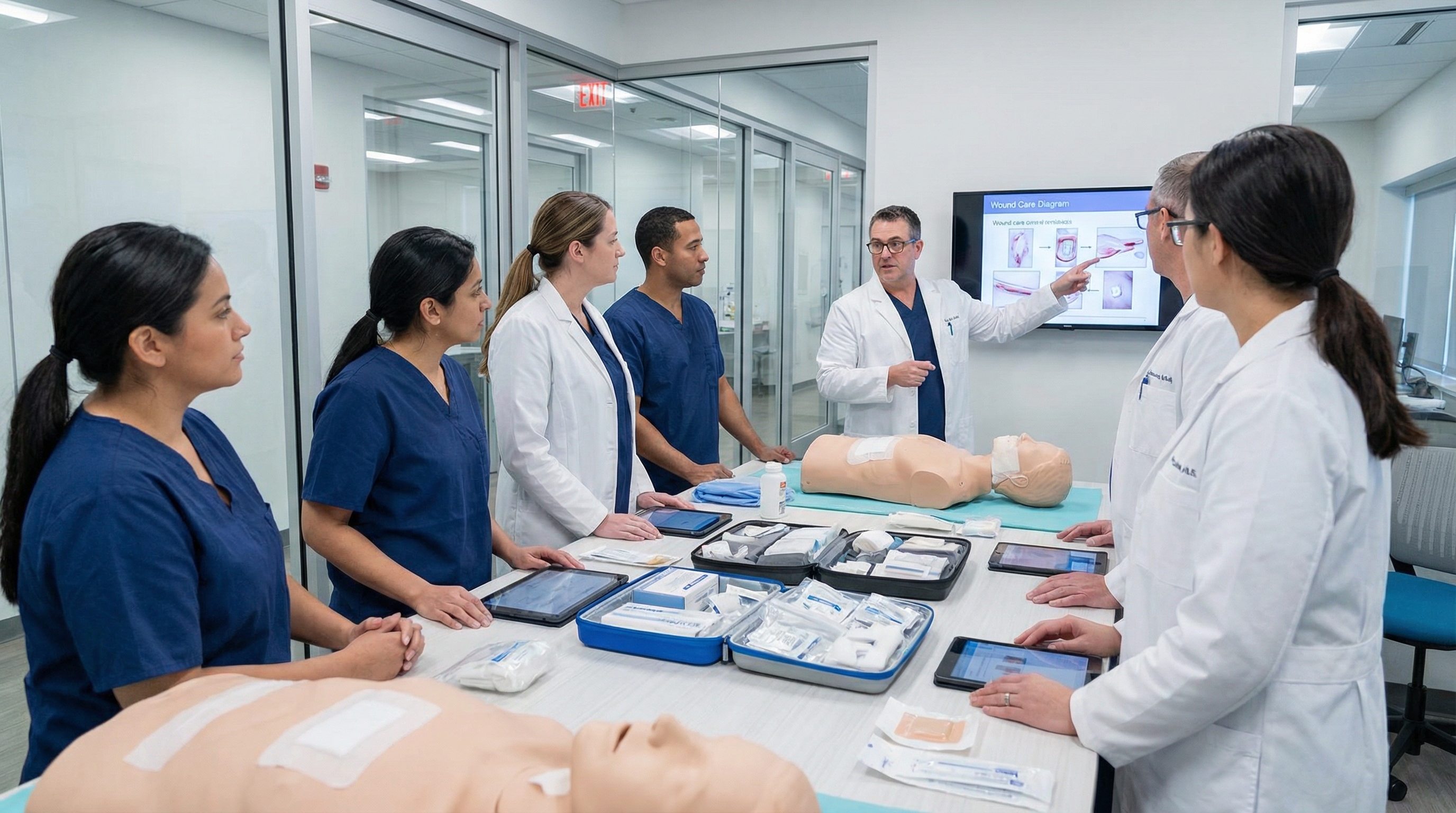
Building an in-house wound care program is one of the highest-ROI investments an HMO practice can make. Done right, it can save $100,000-200,000 annually while improving patient outcomes and satisfaction. But where do you start?
This comprehensive guide walks you through every step of building a successful wound care program, from initial assessment to ongoing optimization.
Table of Contents
1
Assessment & Planning
Before building anything, you need to understand your current state and define your goals.
Analyze Your Current Wound Care Patterns
Pull data from the past 12 months to understand:
- How many unique wound patients did you refer out?
- What wound types were referred (DFUs, venous ulcers, pressure injuries, etc.)?
- Where are patients being referred?
- What's the average cost per wound episode?
- What's your total annual wound care spend?
Assess Your Staff Capabilities
- What wound care training do nurses already have?
- How many nurses are available for wound care visits?
- Are there nurses interested in wound care specialization?
- What's your current nursing workflow capacity?
Evaluate Your Infrastructure
- Do you have a clean room suitable for wound care?
- What equipment do you currently have?
- Does your EHR support wound documentation templates?
- Do you have a camera for wound photography?
Define Your Goals
- What percentage of wounds do you want to manage in-house?
- What's your target timeline for implementation?
- What financial outcomes are you targeting?
- What quality metrics matter most?
Deliverables from Phase 1
- ✓ Referral analysis with cost breakdown
- ✓ Staff capability assessment
- ✓ Infrastructure gap analysis
- ✓ Written goals and success metrics
2
Protocol Development
Protocols are the backbone of your wound care program. They ensure consistency, quality, and proper documentation.
Wound Assessment Protocols
Develop standardized processes for:
- Initial wound assessment (size, depth, tissue type, exudate)
- Wound classification (etiology, staging)
- Photography standards (lighting, ruler, angles)
- Vascular assessment (ABI for lower extremity wounds)
- Nutritional status evaluation
- Comorbidity documentation
Treatment Algorithms
Create decision trees for common wound types:
- Diabetic Foot Ulcers: Offloading requirements, debridement frequency, dressing selection
- Venous Leg Ulcers: Compression eligibility, ABI thresholds, edema management
- Pressure Injuries: Stage-specific care, turning protocols, surface recommendations
- Surgical Wounds: Dehiscence management, infection criteria
Escalation Criteria
Define exactly when to refer:
- Signs requiring immediate surgical referral
- Non-healing wounds (timeline thresholds)
- Complex wounds beyond scope
- Vascular compromise requiring intervention
Documentation Templates
- Initial wound assessment form
- Progress note template
- Wound measurement log
- Patient education documentation
- Discharge/healed wound documentation
Deliverables from Phase 2
- ✓ Assessment protocol document
- ✓ Treatment algorithms by wound type
- ✓ Escalation criteria checklist
- ✓ EHR-integrated documentation templates
3
Staff Training
Training is critical. Your nurses need both knowledge and hands-on skills to manage wounds confidently.
Classroom Training Topics
- Wound healing physiology
- Wound etiology identification
- Assessment and staging techniques
- Documentation requirements
- Infection recognition
- When to escalate
Hands-On Skills Training
- Wound measurement techniques
- Photography best practices
- Sharp debridement (supervised)
- Dressing application techniques
- Compression bandaging (multi-layer)
- Negative pressure wound therapy setup
Patient Education Training
- Teaching offloading importance
- Home care instructions
- Signs to watch for
- Appointment compliance strategies
Training Methods
- Didactic sessions: 4-8 hours of classroom learning
- Hands-on practice: Skills lab with simulation
- Shadowing: Observe experienced wound care providers
- Supervised cases: First cases with expert support
Deliverables from Phase 3
- ✓ Training completion certificates
- ✓ Competency checklists signed off
- ✓ Training materials for future reference
- ✓ Identified wound care champions
4
Supply Chain & Equipment
You need the right supplies and equipment to deliver quality wound care efficiently.
Essential Supplies
- Primary dressings: Alginates, hydrogels, hydrocolloids, foams
- Secondary dressings: Gauze, tape, wraps
- Compression supplies: Multi-layer bandages, compression stockings
- Debridement supplies: Curettes, scalpels, enzymatic agents
- Cleansing supplies: Saline, wound cleansers
- Offloading devices: CAM boots, healing sandals
Equipment
- Wound measurement rulers/guides
- Digital camera (or smartphone with good camera)
- Doppler for vascular assessment
- Portable NPWT units (as needed)
- Adequate lighting for wound room
Vendor Relationships
Establish accounts with wound care suppliers:
- Research competitive pricing
- Negotiate volume discounts
- Set up auto-replenishment for staples
- Identify emergency supply sources
Deliverables from Phase 4
- ✓ Inventory of essential supplies
- ✓ Vendor accounts established
- ✓ Equipment in place and tested
- ✓ Supply ordering procedures documented
5
Implementation
You're ready to launch. Start with simpler cases and build confidence.
Launch Strategy
- Start small: Begin with 2-3 patients with straightforward wounds
- Build confidence: Success with early cases motivates the team
- Get support: Have expert consultation available for questions
- Document everything: Create a learning library from early cases
- Expand gradually: Add more complex cases as skills develop
Scheduling Considerations
- Block dedicated wound care appointment slots
- Allow adequate time (30-45 minutes for initial, 20-30 for follow-up)
- Schedule follow-ups at appropriate intervals (typically weekly)
- Coordinate with physician availability for assessments
Communication
- Inform staff about the new capability
- Update referral coordinators on new protocols
- Communicate with patients about in-house options
Deliverables from Phase 5
- ✓ First patients successfully treated
- ✓ Workflow validated and refined
- ✓ Team confidence established
- ✓ Initial metrics captured
6
Ongoing Optimization
The launch is just the beginning. Continuous improvement is key to long-term success.
Quality Tracking
Monitor these metrics monthly:
- Healing rates by wound type
- Time to closure
- Infection rates
- Referral rates (should decrease over time)
- Patient satisfaction
- Cost per wound episode
Continuous Learning
- Monthly case review sessions
- Protocol updates based on outcomes
- Continuing education for staff
- Conference attendance for wound care champions
Program Expansion
- Add capability for more complex wounds
- Consider advanced therapies (NPWT, skin substitutes) as volumes justify
- Explore wound care center partnerships for cases requiring specialist care
Common Pitfalls to Avoid
- Skipping training: Under-trained staff leads to poor outcomes and abandoned programs
- Unclear escalation criteria: Staff need to know exactly when to refer
- Inadequate documentation: Poor documentation leads to billing issues and liability concerns
- Starting too complex: Build confidence with simpler wounds first
- Lack of physician buy-in: Programs need physician champions to succeed
- Not tracking outcomes: You can't improve what you don't measure
DIY vs. Expert Support
You can build a wound care program yourself or get expert help. Here are the tradeoffs:
DIY Approach
- Lower upfront cost
- Longer implementation time (3-6 months)
- Higher risk of missteps
- Need to develop all protocols from scratch
- Training quality varies
With WCHMO Consulting
- Faster implementation (4-6 weeks)
- Proven protocols and templates
- Expert training with hands-on skills
- Ongoing support for complex cases
- Higher success rates
Want Expert Help?
WCHMO can guide you through every phase of building your wound care program.
View Services Free Consultation